Volta Studio
What is AI script breakdown?
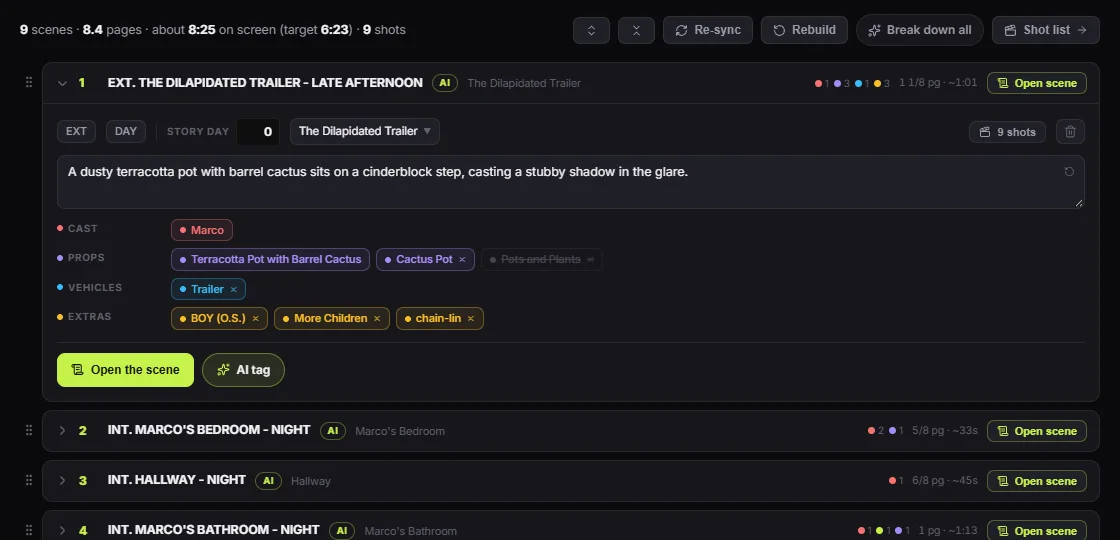
AI script breakdown reads a screenplay and lists what each scene needs: who is in it, which props, vehicles and extras, where it happens and how long it runs. Volta Studio does this on its Breakdown page, then carries the same list into the shot list, the stripboard, the call sheets and the budget, so one correction reaches every page.
What does a breakdown contain?
One entry per scene, with the heading, the location, day or night, the length in eighths of a page, and everything the scene needs, tagged by department.
- Cast and extras, including voices heard off screen.
- Props, vehicles, wardrobe and other departments.
- The location the scene belongs to, shared with every other scene set there.
- The story day, so continuity can be tracked across scenes.
- An estimate of screen time from the page count.
What does the AI do, and what is still yours?
The AI does the first pass, reading the text and tagging what it finds. It is fast and thorough, and it is a first draft: it will sometimes read a passing mention as a prop, or split one thing into two. Tags can be removed or added by hand in a click, and a person should read every scene before a schedule depends on it.
From breakdown to shot list.
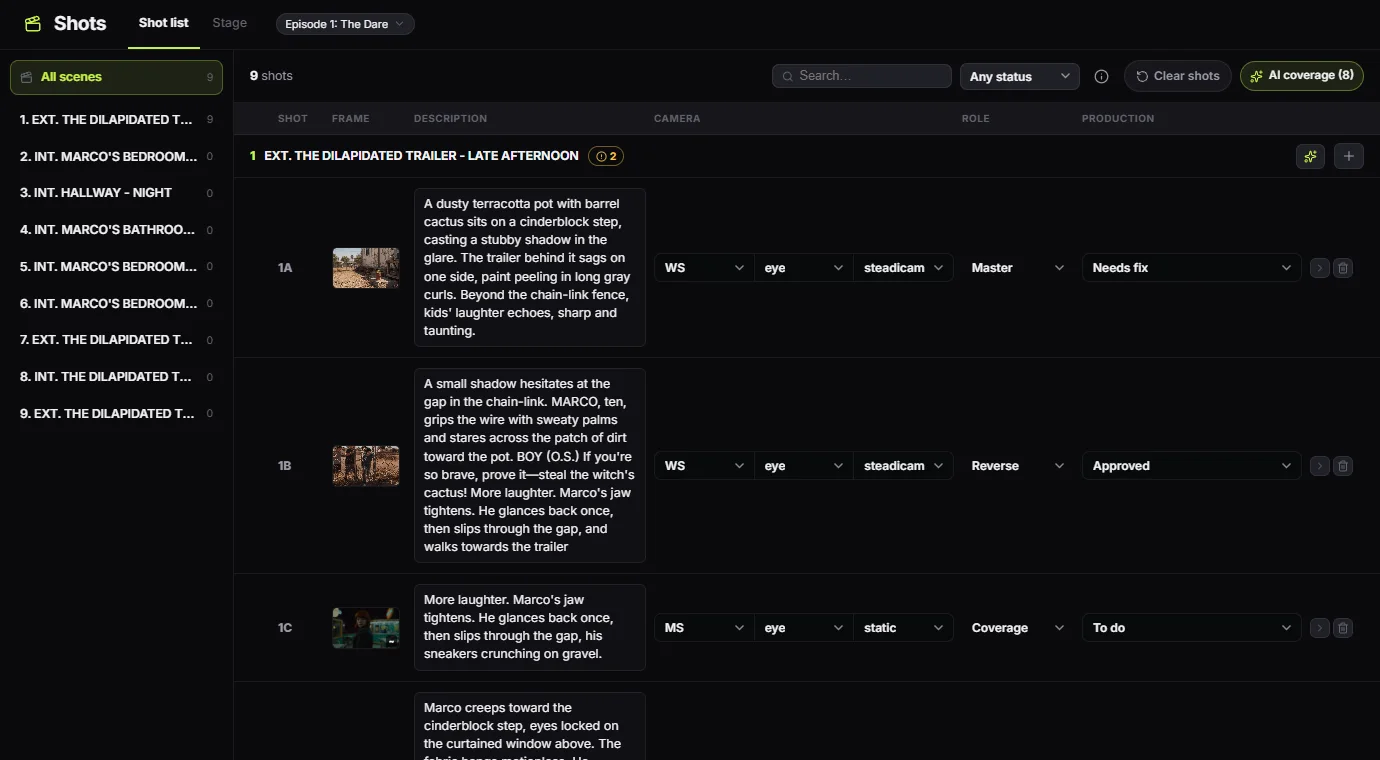
Every scene becomes a place for shots, and AI coverage can suggest them. Each shot is tied to the lines of the script it covers, so it prints as a lined script and follows the text through rewrites.
From breakdown to schedule.
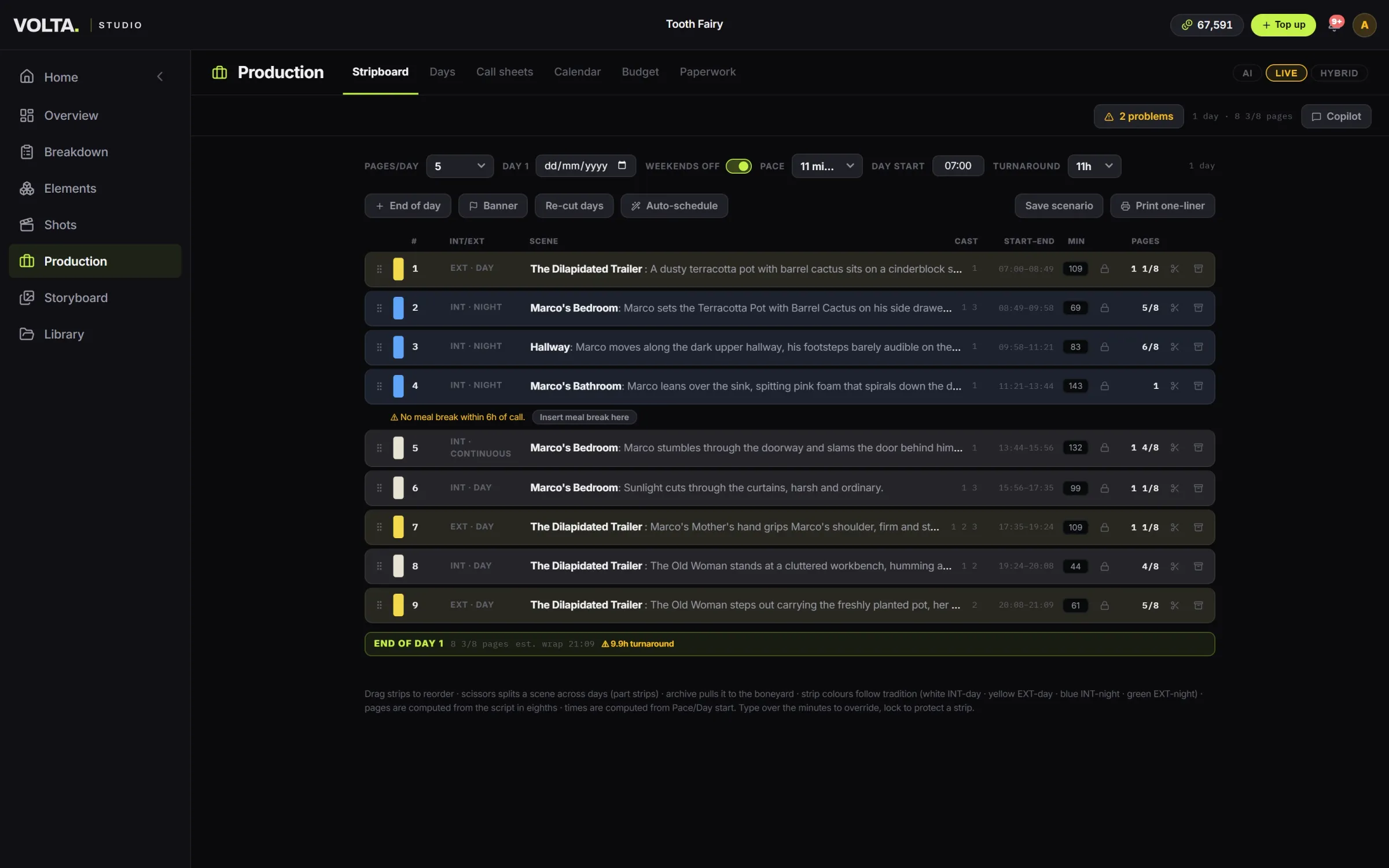
On a live or hybrid project, the same scenes become strips on a stripboard, in the traditional colours, with their pages and cast. Move a strip and the day recalculates, and call sheets and the budget read from the same list.
What happens when the script changes?
Scripts change, so a breakdown has to follow. Re-sync matches scenes by their text, keeps what you did to the ones that survived, and shows what changed before anything moves. Takes made from a scene that changed are flagged as outdated instead of being silently kept or thrown away.
Which script files can it read?
PDF, Final Draft, Word, Fountain, Fade In, Highland, Markdown, HTML and plain text. A whole feature comes in, and the formatting is rebuilt as a real screenplay you can keep editing.
Common questions
- How accurate is AI script breakdown?
- Good enough to save most of the typing, not good enough to go unread. It finds what is written, and misses what is only implied, such as a car a location needs but no line mentions. Treat it as a first pass that a person checks scene by scene.
- Does an AI breakdown cost tokens?
- Tagging by hand costs nothing. The AI pass spends a small amount of tokens, and the button shows the price before it runs. The breakdown it fills in, the shot list and the schedule are free to keep working in on every plan.
- Can I import a script from Final Draft?
- Yes. Volta reads .fdx files, as well as PDF, Word, Fountain, Fade In, Highland, Markdown, HTML and plain text, and rebuilds them as an editable screenplay.
- Do I need a breakdown for an AI film?
- Yes, though less of it. There is no shooting schedule, but the same list tells you which characters, locations and props need designing before a shot can be made, and it feeds every prompt.