Volta Studio
What is AI film production software?
AI film production software is one workspace that takes a film from script to delivery, with AI models doing the generation and the project itself holding the story, the shots and the budget. Volta Studio is one: you write the script, break it down, plan shots and a schedule, generate takes in context, then review them and cut them together.
How is it different from an AI video generator?
A generator takes a prompt and returns a clip. It does not know your script, your cast or the shot before, so the work of keeping a film together stays with you, in folders and spreadsheets. Production software keeps that work in the project: a shot knows its scene, its lines and its characters, and a generation starts from all of it.
What should it connect?
The test is whether a change in one place reaches the others. Most of the value is in the joins between these stages, not in any one of them.
- Writing: a real screenplay editor, with an outline and a beat sheet, and the option to import a script you already have.
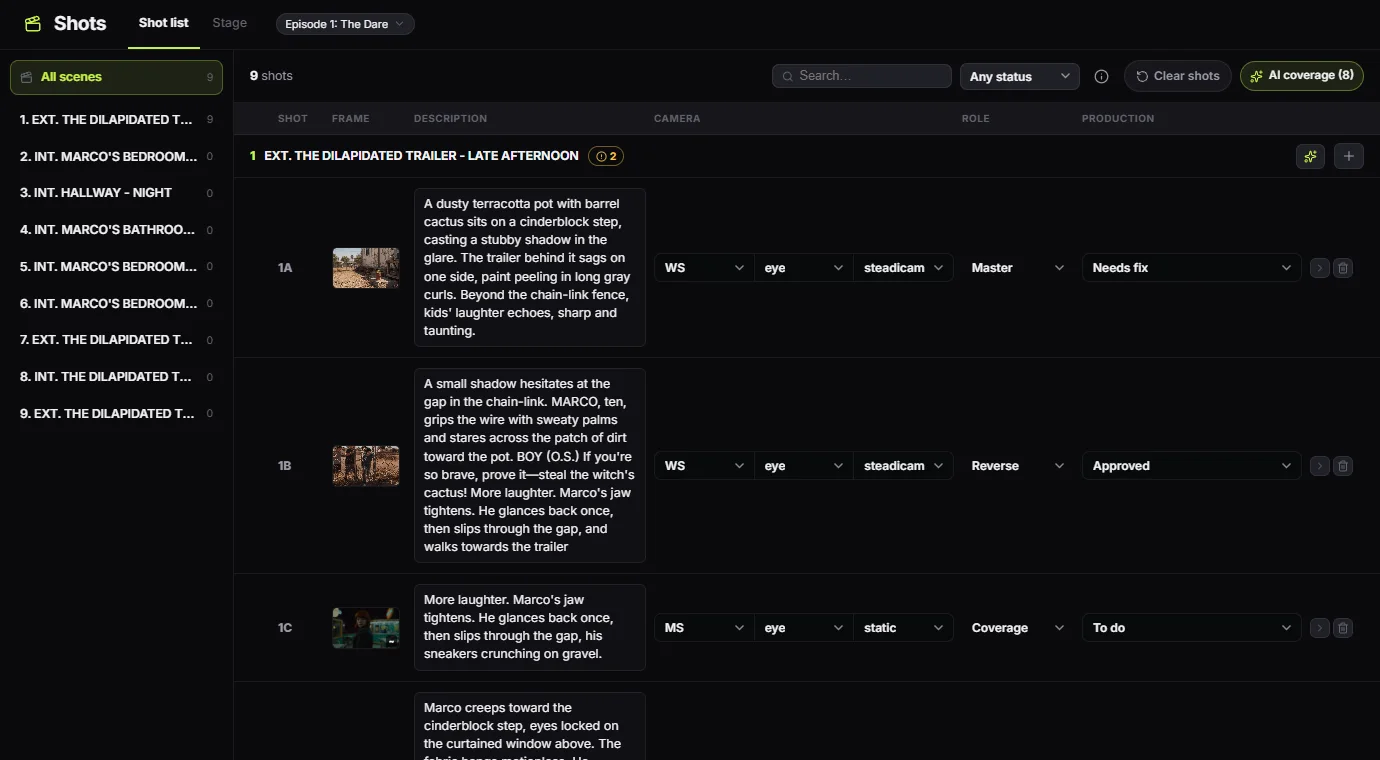
- Planning: a breakdown, a shot list tied to the script, a storyboard and, for anything filmed, a schedule and a budget.
- Making: characters, locations and looks that every shot draws on, and a choice of models, with the price shown first.
- Finishing: review and sign-off, then a cut, sound, languages and delivery.
What to check before you choose.
A demo of one good clip says little about a film. These are the things that show up in week three.
- Does the same character survive ten shots, and how much of that is your work?
- If a scene changes in the script, what happens to its shots?
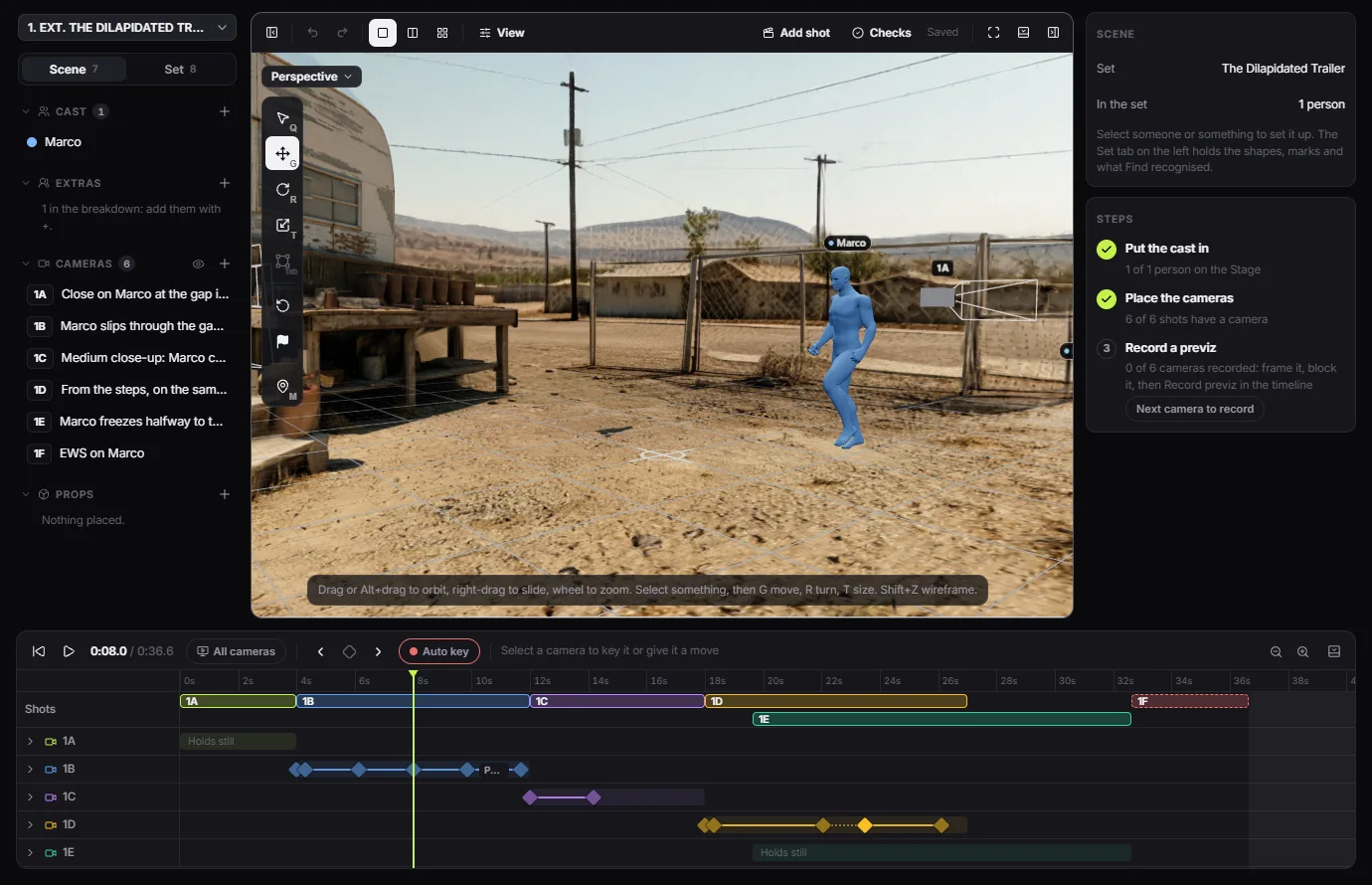
- Can you block a scene before you pay for a take?
- Is the price shown before each run, and is a failed run refunded?
- Who owns the output, and does the company train on it? Read the terms, not the page.
- Can a team share one budget, with limits and approvals?
- Can you leave? Check that scripts, shots and takes export as ordinary files.
How does Volta Studio do it?
Volta is built as three connected sections. The Story holds the script, the outline, the characters and the world. The Slate holds the breakdown, the shots, the storyboard, the 3D Stage, the schedule and generation. The Cut is the editor, with sound, colour, languages and delivery, and is switched on per account. A team works in one project with roles, a shared budget and a Review room.
When do you not need it?
If you are making one clip for a post, a generator is simpler and faster. Production software earns its place once there is a script, more than a handful of shots, more than one person, or a budget someone has to answer for.
Common questions
- Can AI make a whole film?
- AI can generate the shots, voices and music, but a film still needs someone to decide what it is. In Volta the script, the choices of shot and the picks of take are yours, and the models do the making. Expect to direct, not to press one button.
- Do I still need an editor?
- You still need the cut. Volta can lay picked takes on a timeline in its own Cut, where it is switched on, or you can take the shots and an edit list to the editor you already use.
- Can I use it for a live-action shoot?
- Yes. A project can be live, AI or hybrid. On a live or hybrid project the Slate adds the stripboard, call sheets, budget and reports, built from the same breakdown.
- Who owns what I make?
- In Volta you do. Scripts, boards, shots and takes belong to you, and Volta's Terms say it does not train on your projects, uploads or generations. AI output has its own copyright questions in most countries, and those are worth checking where you work.